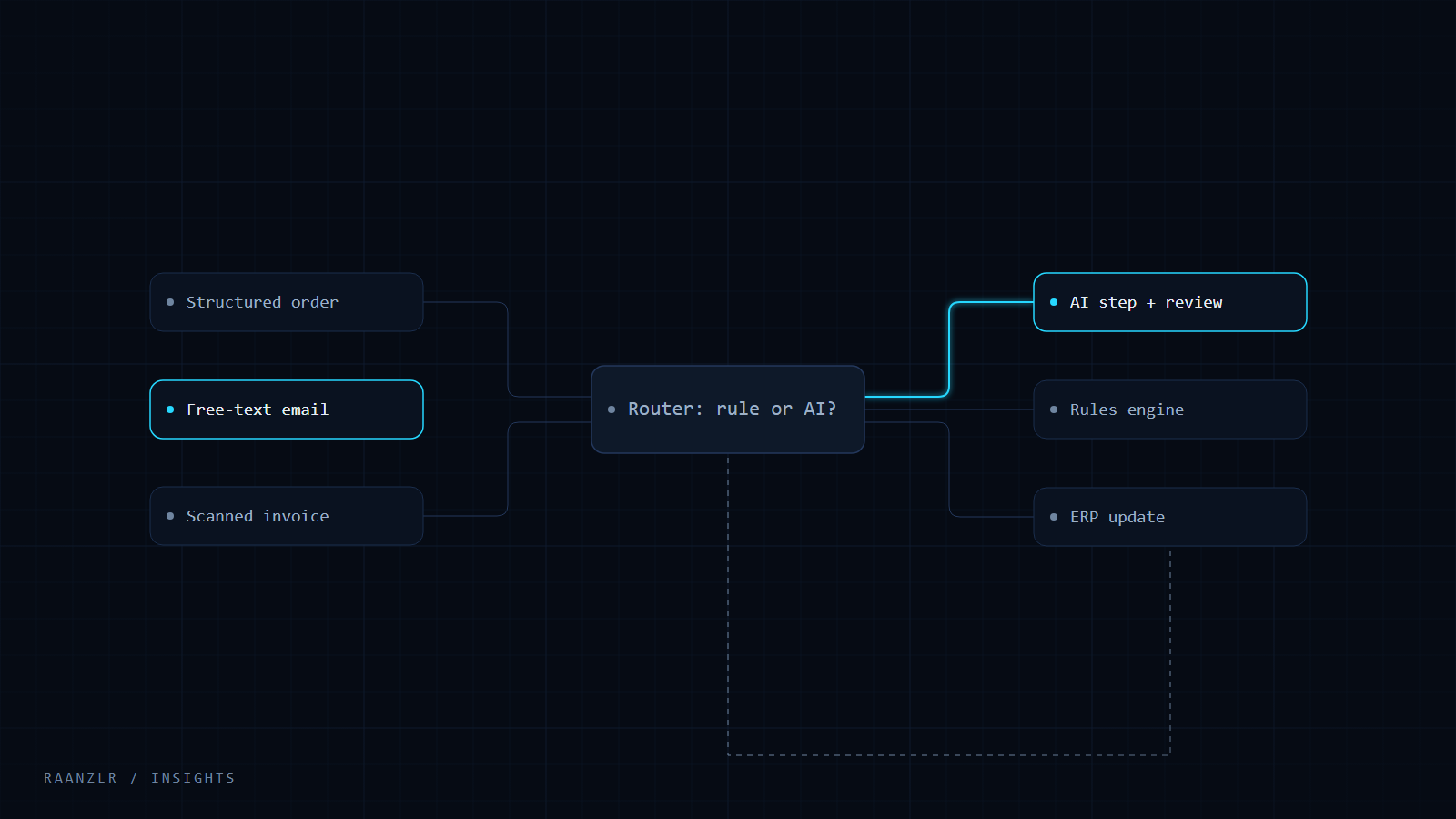
The short answer: rules for the predictable, AI for the messy
Traditional automation does exactly what you specified, every time, for almost nothing per run. AI automation can read and interpret input that no rule anticipated, but it costs something on every run and is sometimes wrong.
So the useful question is not which one to buy. It is which steps in a process need judgement and which do not. In most business workflows the answer is mixed: a handful of steps involve reading an email, a contract or a scanned form, and everything around them is plain data movement that a rule handles better.
This guide compares the two on the things that decide a project: reliability, cost per run, upkeep and risk. It ends with a simple way to split a workflow between them. If you want the broader definition of AI automation first, start with What is AI automation for business?