
Claude Opus 5.5 vs GPT-6 Astra: Which Model Should Run Your Business Automation?
AI Models7 min readSeptember 28, 2026

Claude Opus 5.5 vs GPT-6 Astra: Which Model Should Run Your Business Automation?

Claude Opus 5.5 leads independent testing and costs 60% less per token than GPT-6 Astra. Here is how the September 2026 models compare for real business workflows, and where each one fits.

Is Claude Opus 5.5 better than GPT-6 Astra?

On independent testing, yes overall: Claude Opus 5.5 scores 58 on the Artificial Analysis Intelligence Index against 53 for GPT-6 Astra, and costs $4/$20 per million tokens against $10/$50. GPT-6 Astra still leads some agentic benchmarks such as AutomationBench and uses far fewer tokens per task, so the better choice depends on the workflow.

01

The short answer: Opus 5.5 leads, and the right pick still depends on the job

Three frontier models feeding one workflow: the real decision is which step runs on which model.

If you are choosing a model to run business automation this quarter, Claude Opus 5.5 is the strongest general pick on independent testing, and it now costs far less per token than GPT-6 Astra. It is still the wrong answer for some jobs. High-volume, short tasks belong on a cheaper model, and GPT-6 Astra keeps a lead on a few agentic benchmarks.

Anthropic released Opus 5.5 on 22 September 2026, three weeks after Google shipped Gemini 3.8 Flash and shortly after OpenAI released GPT-6 Astra. Three frontier releases in one month turn a routine purchase into a practical question for any business: which model should sit behind your support agent or your CRM automations, and how tied to one provider should you be?

This article compares the three on cost and on what the benchmarks actually show, then maps each one to the kind of workflow it suits. Every number links to its source, and we mark where a figure comes from the vendor rather than an independent tester.

02

What Anthropic shipped on 22 September

Opus 5.5 replaces Opus 5, which Anthropic released on 24 July. For most budgets the headline change is price, and capability comes second.

  • Price: $4 per million input tokens and $20 per million output tokens, down from $5 and $25 for Opus 5. Reading from the prompt cache drops to $0.20 per million tokens, from $0.50.
  • Context: a 1 million token window with text and image input, according to Artificial Analysis.
  • Availability: the Claude API, plus Amazon Web Services, Google Cloud and Microsoft Azure, so most companies can buy it through a cloud account they already have.
  • Family: Anthropic says Sonnet 5.5 and Haiku 5.5 follow in the coming weeks, which matters if you want a cheaper Claude tier for simple steps.

The cache discount is easy to overlook and often matters more than the headline rate. An automation that sends the same long instructions or product catalogue on every call can cache that prefix, so most of each request is billed at $0.20 per million tokens instead of $4.

As an illustration: an agent that sends a 20,000-token policy pack with each of 10,000 requests a month reads 200 million tokens of that prefix. At the standard input price that part alone costs $800 a month on Opus 5.5. Read from the cache, it costs $40, plus a small charge the first time the cache is written.

Anthropic also ships Opus 5.5 with the safeguards it applies to its larger Fable models, which limit use for exploit discovery and biological weapons research. That rarely touches a business workflow, but a security team evaluating it for penetration testing should read the usage policy first.

03

Price and positioning side by side

On list price, Opus 5.5 costs 60% less per token than GPT-6 Astra, on both input and output. Gemini 3.8 Flash sits in a different bracket: at its introductory rate it is about five times cheaper than Opus 5.5, and Google has already announced that the rate doubles on 1 January 2027. Cached input shows the same gap as the headline price, at $0.20 per million tokens on Opus 5.5 against $1.00 on GPT-6 Astra.

List price is only half of the bill. How many tokens a model spends per task decides the other half, which is the subject of the next two sections.

The table uses each vendor's published API pricing. The last row is our editorial reading of where each model fits, not a benchmark result.

September 2026 frontier models at a glance
Claude Opus 5.5GPT-6 AstraGemini 3.8 Flash
Released22 Sep 2026September 20262 Sep 2026
Input, per 1M tokens$4$10$0.75 until 31 Dec 2026, then $1.50
Output, per 1M tokens$20$50$3.75 until 31 Dec 2026, then $7.50
Where it fitsLong, multi-step agent work with tools and documentsTeams already on OpenAI; science and terminal-heavy tasksHigh-volume, short tasks such as routing and extraction

Source: Published API list prices from Anthropic, OpenAI and Google, September 2026

04

Benchmarks: where Opus 5.5 leads and where it doesn't

Anthropic's launch table compares Opus 5.5 with its own Fable 5.1 and with GPT-6 Astra on agentic benchmarks. These are vendor-reported figures, so treat them as the most favourable reading.

Opus 5.5 leads on Terminal-Bench 4.0, at 66.4% against 57.9% for GPT-6 Astra, and on FrontierCode v1.1, at 54.4% against 53.3%. GPT-6 Astra is ahead on AutomationBench, 41.4% against 40.0%, and on Terminal-Bench-Science, 64.6% against 58.7%. AutomationBench is the closest of these to what a business automation actually does, and there the two models are effectively tied.

Independent testing narrows the one big gap. Artificial Analysis ran Terminal-Bench 4.0 itself and measured Opus 5.5 at 59.6%, level with GPT-6 Astra, rather than 8.5 points ahead. That difference is normal, because vendors test with their own harnesses and settings. It is also why a launch-day number should never decide a project on its own.

Agentic benchmarks, vendor-reported (%)

Source: Anthropic, Introducing Claude Opus 5.5, 22 September 2026. Vendor-reported.

05

Independent scores, and the token bill behind them

On the Artificial Analysis Intelligence Index, which combines ten evaluations run by one tester under the same conditions, Opus 5.5 at maximum effort scores 58. GPT-6 Astra and Claude Fable 5.1 sit at 53, and GPT-5.6 Sol at 47. Opus 5.5 leads six of the ten evaluations, including Humanity's Last Exam at 61.4% and SciCode at 66.9%. It still trails on CritPt, AA-LCR and GDP.pdf.

The catch is effort. To reach that score, Opus 5.5 used about 119,000 output tokens per task, against roughly 27,000 for GPT-6 Astra. Artificial Analysis found its cost per task level with Opus 5 despite that, because the per-token price fell. A lower price per token does not automatically mean a lower bill, and a model that thinks longer also answers more slowly.

For automation that runs thousands of times a day, those two facts matter more than a five-point lead on an index:

  • Measure cost per completed task, not cost per token, on a sample of your own workload.
  • Set the effort level per step. Most workflows mix one hard reasoning step with many simple ones, and only the hard step needs maximum effort.
Artificial Analysis Intelligence Index, maximum effort

Source: Artificial Analysis, 9 and 22 September 2026 (independent testing)

06

Which model for which workflow

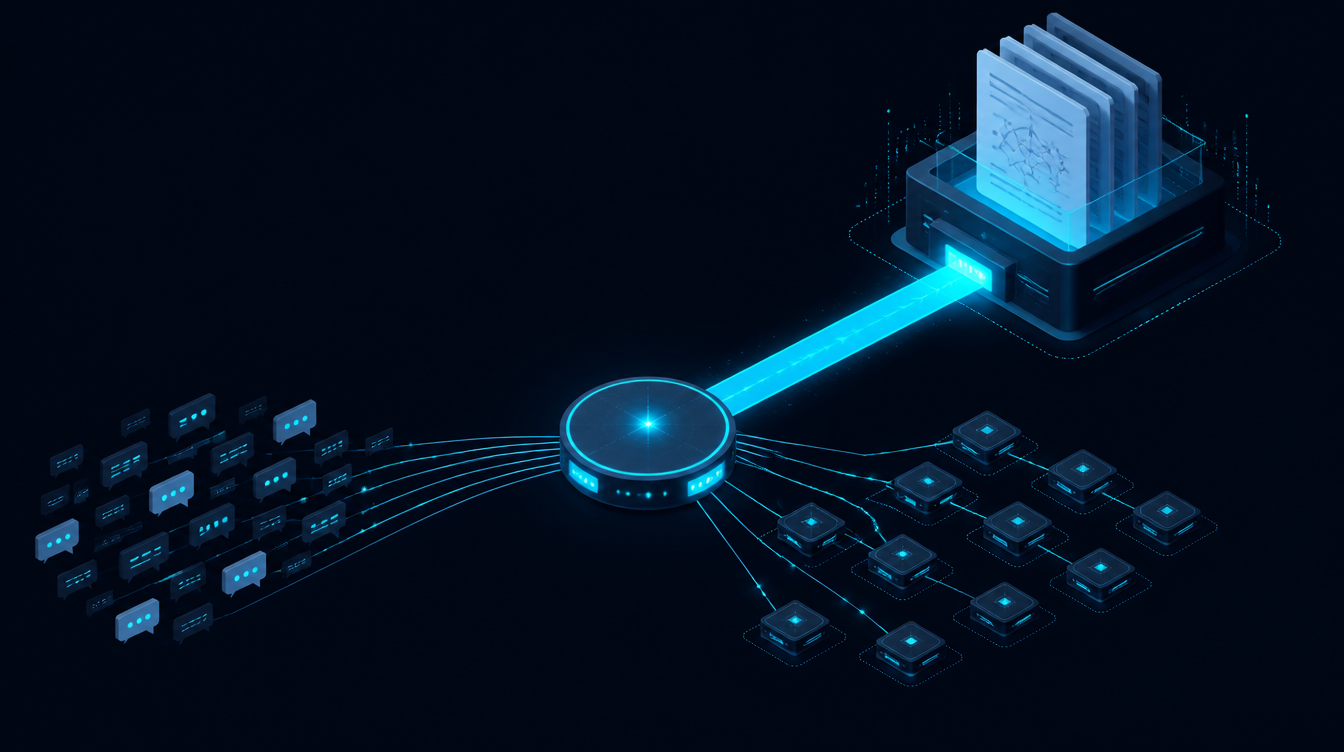
A routing layer sends the rare hard step to a frontier model and the high-volume simple steps to a cheaper one.

Most businesses don't need one winner. They need the right model on each step, and a way to change it when prices move again, as they did several times this month.

Long, multi-step agent work

A sales or support agent that reads your policies, checks an order in the CRM, drafts a reply and hands off to a person when it is unsure is the job Opus 5.5 is built for. It leads knowledge-work evaluations such as GDPval-AA and AA-Briefcase, and its lower cache price suits agents that reuse the same long instructions.

High-volume, short tasks

Classifying inbound messages or extracting fields from invoices happens thousands of times a day and rarely needs frontier reasoning. Gemini 3.8 Flash at its introductory price is a sensible default here. Put a reminder in the calendar for 1 January 2027, when its price doubles.

Teams already on OpenAI

If your data and tooling already run through OpenAI and have passed your security review, GPT-6 Astra is a strong model and the switching cost may outweigh a benchmark gap. It also uses far fewer output tokens per task, which helps response time.

Arabic and bilingual work

None of the benchmarks above measures Gulf dialects or messages that mix Arabic and English. If your customers write in Arabic, test each candidate on a few hundred of your real messages before you choose.

07

What this means for business automation

A new frontier model every few weeks is a good reason to design automation that doesn't depend on any one of them. Raanzlr builds AI agents and workflow automation with a routing layer between your systems and the model, so the hard reasoning step can run on Opus 5.5 while bulk steps run on a cheaper model, and either can be swapped without rewriting the workflow. Before anything goes live, we test candidate models on your own documents and messages in Arabic and English, then connect the result to your CRM through clean API integrations. The work is delivered remotely for companies in the United States and Saudi Arabia.

// FAQ

How much does Claude Opus 5.5 cost?
Anthropic lists Claude Opus 5.5 at $4 per million input tokens and $20 per million output tokens, with prompt-cache reads at $0.20 per million. That is 20% below Opus 5 on raw tokens. The real cost of an automation depends on how many tokens each task uses, so measure cost per completed task on your own workload.
Which AI model is cheapest for high-volume automation?
Among the September 2026 releases, Gemini 3.8 Flash has the lowest list price: $0.75 per million input tokens and $3.75 per million output tokens until 31 December 2026, then $1.50 and $7.50. It suits short, repetitive steps such as classification and extraction, where frontier reasoning adds cost without adding accuracy.
Should a business commit to one AI model?
Usually not. Several frontier models shipped in September 2026 alone, and prices moved with each release. Putting a routing layer between your systems and the model lets you run each step on the model that fits it, and switch providers later without rebuilding the workflow or retraining your team.

// Want to apply this?

Let's discuss how this applies to your business.

A senior engineer reviews every inquiry and responds within one business day.

Start a Conversation