Saudi Arabia's Arabic-First AI Agents: A New Digital Era
AI agents and autonomous systems8 min readJune 11, 2026

Saudi Arabia's Arabic-First AI Agents: A New Digital Era

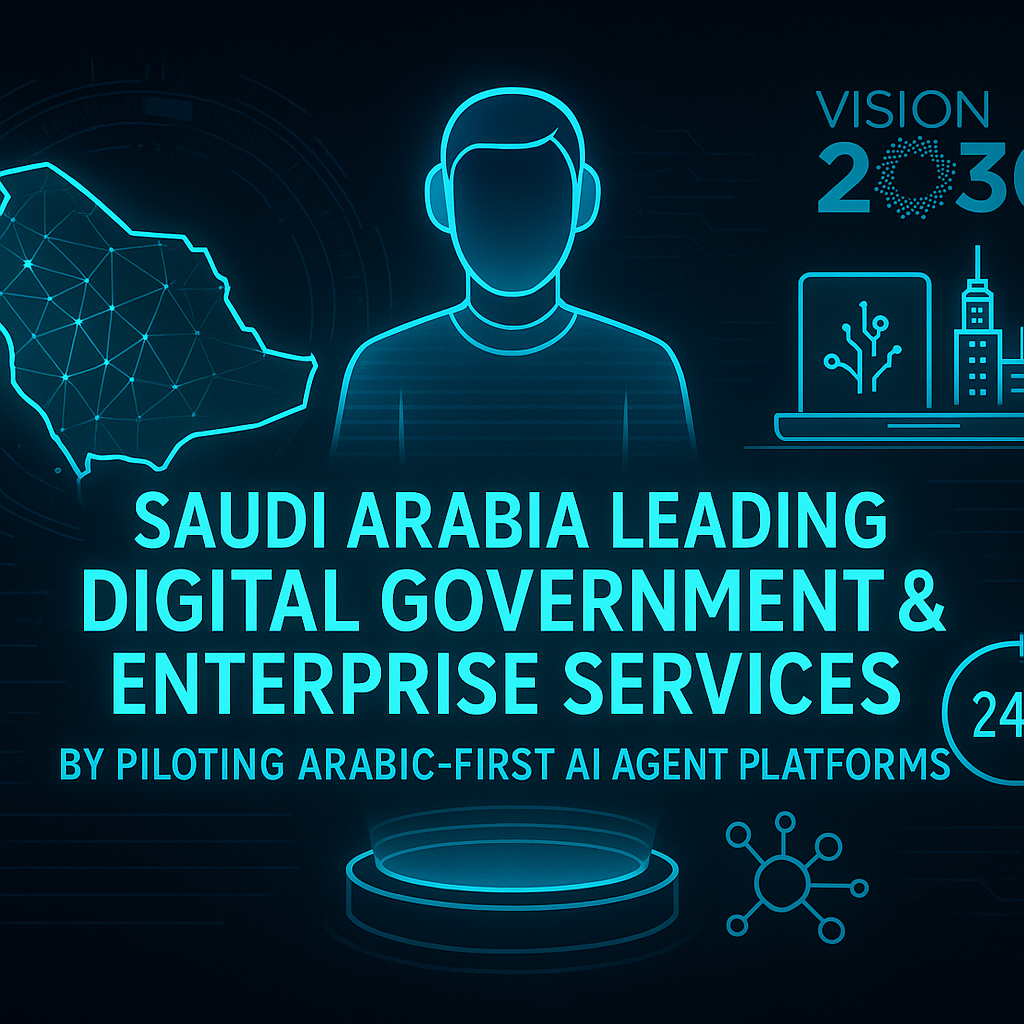
Saudi Arabia is leading a transformative wave in digital government and enterprise services by piloting Arabic-first AI agent platforms. Aligned with Vision 2030, these platforms are revolutionizing citizen services and enterprise operations, providing 24/7 support and integration with existing systems. GCC countries are keenly observing these developments to understand the potential cost savings and efficiency gains from autonomous, Arabic-capable agents.

01

The Race for Arabic-First AI in Saudi Arabia and UAE

Saudi Arabia and the UAE are at the forefront of deploying Arabic-first AI agents by 2025–2026 in various sectors including ministries and large enterprises. This initiative underscores the regional focus on digital transformation, emphasizing localization and linguistic relevance. With their strategic geopolitical positions, both countries aim to lead the GCC in AI-driven solutions aligning with global standards, while promoting cultural and linguistic authenticity.


02

Enabling Technologies: Arabic LLMs and AI Clouds

The advancement of large language models (LLMs) specialized in Arabic, along with sovereign AI clouds in the KSA and UAE, are pivotal for deploying compliant, scalable AI agents. These technologies ensure that AI systems are not only linguistically capable but also adhere to regional data residency and regulatory requirements, creating a robust foundation for wide-scale implementation.

03

Key Use Cases Across the GCC

GCC organizations are exploring various use cases for AI agents, including support centers, permit issuance, HR functions, and customer care in banking and telecom sectors. These agents offer unprecedented efficiency and accuracy, allowing organizations to streamline operations and enhance user satisfaction through 24/7 availability and context-aware support.

04

Architecture of an AI Agent Stack in MENA

A comprehensive AI agent stack for the MENA region includes orchestration layers, enterprise connectors, identity verification, and secure auditing. This architecture is designed to seamlessly integrate with existing systems, supporting dynamic workflows and enhancing overall operational efficiency while respecting local regulatory and cybersecurity norms.

05

Navigating Regulation and Risk

Regulatory compliance and risk mitigation are crucial for deploying AI agents, especially regarding data residency, dialect handling, and policy alignment. Ensuring that AI systems are culturally and legislatively compatible is vital for their acceptance and effectiveness in the GCC, allowing organizations to maintain service quality while minimizing potential liabilities.

06

Practical Roadmap for GCC Organizations

Adopting a phased approach, GCC organizations can start with human-in-the-loop AI systems before transitioning to semi-autonomous and fully autonomous agents. This roadmap encourages iterative learning, allowing businesses to incrementally adopt AI technologies and refine their strategies based on real-world feedback and operational dynamics.

07

Vendor Landscape and Market Trends

The vendor landscape for Arabic-first AI agents in the GCC is diverse, ranging from local startups to global hyperscalers. These providers are rapidly localizing their frameworks to meet the distinct needs of GCC markets, offering solutions that are both innovative and compliant with regional norms, thereby playing a crucial role in the AI transformation journey.

// Want to apply this?

Let's discuss how this applies to your business.

A senior engineer reviews every inquiry and responds within one business day.

Start a Conversation