Humanoid Robots Go Public, and Gulf Capital Quietly Buys In
Robotics13 min readJuly 17, 2026

Humanoid Robots Go Public, and Gulf Capital Quietly Buys In

Agility Robotics just went public and robotics funding hit $18.8 billion in 2026. Qatar, Abu Dhabi and Saudi Arabia are placing three very different bets on humanoid robots.

01

Humanoid Robots Go Public, and Gulf Capital Quietly Buys In

For years the humanoid robot was a demo. A video of a machine folding laundry or walking down a hallway, always a few months away from being a real product. On July 5, Agility Robotics agreed to go public through a merger with Churchill Capital Corp XI at a valuation near $2.5 billion, the first pure-play humanoid robotics company to reach a stock ticker. Two days earlier, analysts confirmed robotics startups had already raised $18.8 billion globally in 2026, more than the entire year of 2025.

Gulf capital did not wait to be invited. Qatar Investment Authority quietly joined a $935 million funding round for the Texas robotics maker Apptronik in February, sitting alongside Google and Mercedes-Benz. Abu Dhabi's MGX closed a $49 billion AI fund with stakes across nearly every major American frontier lab. And in Riyadh, a Saudi robotics company has already signed a framework to bring 10,000 humanoid units into the kingdom over five years.

By 2026, robots already knew how to walk. What changed is that institutional money decided walking, lifting and stacking are now investable line items, and Gulf funds, usually cast as buyers of chips and data centers, are treating this new machine economy the way they once treated oil discoveries: an asset worth owning early, wherever it happens to be built.

02

The SPAC That Made Robots a Stock

The SPAC That Made Robots a Stock

Agility Robotics' path to Nasdaq runs through a special purpose acquisition company, not a traditional IPO, but the mechanics matter less than the underlying numbers. The Oregon-based firm, founded in 2015 as a spinout from Oregon State University, builds Digit, a 5-foot-9, 160-pound bipedal robot with reversed "bird legs" that let it reach shelving from floor to overhead height. Its deal with Churchill Capital Corp XI values the combined company near $2.5 billion and is expected to generate more than $620 million in gross proceeds once it closes later in 2026.

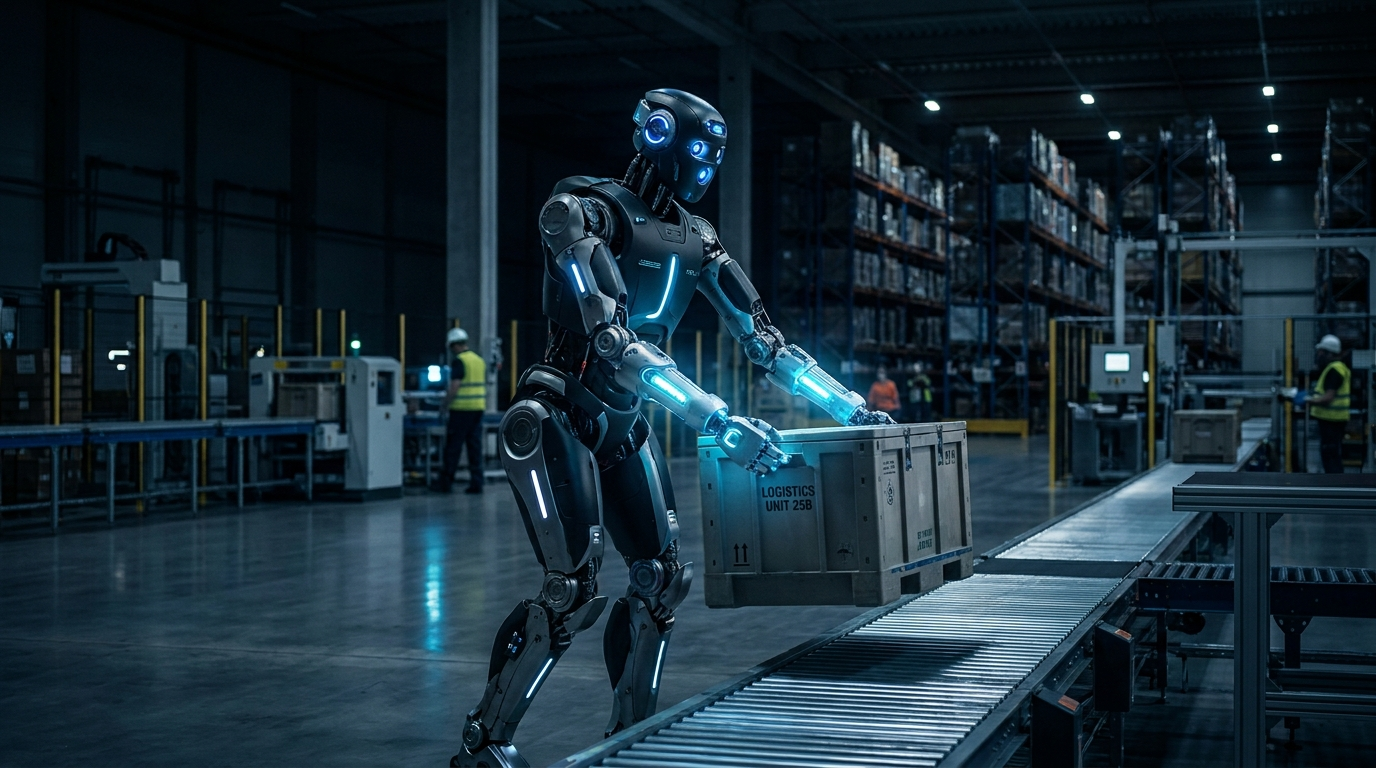
What separates Agility from earlier robotics hype cycles is that the valuation rests on booked revenue, not projections alone. CEO Peggy Johnson, formerly of Microsoft and Magic Leap, says the company has secured more than $300 million in multi-year contracts, covering roughly 1,000 robots already committed to customers including GXO Logistics, Amazon, Toyota Motor Manufacturing Canada, Schaeffler and Mercado Libre. Robots are leased under a monthly service fee rather than sold outright, a structure closer to industrial equipment financing than consumer electronics.

Johnson has also been candid about limits. She has said humanoids reaching ordinary homes remains "ten-plus years" away, and that Digit's near-term value lies in warehouses struggling with a labor shortfall of more than one million unfilled positions in the United States alone. That framing matters for how Gulf investors read the sector too. The near-term opportunity in physical AI is industrial automation with a paying customer, not the humanoid butler still promised in product demos.

03

A Funding Curve That Broke Its Own Record

A handful of headline deals only tell part of the story. The real signal sits in a funding curve that has been climbing for three straight years. Crunchbase data put total seed-through-growth funding for robotics startups at roughly $7.2 billion in 2024, a modest year by venture standards. By the end of 2025, according to an analysis by Value Add VC, that figure had roughly doubled to $15 billion. Halfway through 2026, the sector had already raised $18.8 billion, eclipsing the prior full year with six months still on the calendar.

Three deals explain much of the acceleration. Germany's Neura Robotics closed a Series C of up to $1.4 billion in June, backed by Amazon, Nvidia, Qualcomm and the stablecoin issuer Tether, making it Europe's most heavily funded humanoid maker. Figure AI raised more than $1 billion last September at a $39 billion valuation from a syndicate including Nvidia and Intel Capital. And Apptronik closed its own $935 million Series A extension in February, discussed in the next section.

What is notable is where the checks are coming from. Chip makers, cloud providers and telecom carriers are writing rounds once dominated by pure venture funds, treating humanoid robotics as a supply chain bet tied to their existing businesses rather than a distant moonshot. Sovereign capital, including from the Gulf, is arriving through the same door.

Robotics Startup Funding, 2024-2026

Source: Crunchbase News (2024); Value Add VC analysis (2025-2026)

04

Qatar's Quiet Seat at Apptronik's Table

Qatar's Quiet Seat at Apptronik's Table

The clearest evidence that Gulf sovereign funds now see humanoid robotics as core AI infrastructure, not a side bet, came in February. Apptronik, the Austin-based maker of the Apollo humanoid, announced it had closed its Series A-X round at $935 million, built from an initial $415 million close and a $520 million extension. The extension brought in new backers alongside repeat investors B Capital, Google and Mercedes-Benz: John Deere, AT&T Ventures and the Qatar Investment Authority.

QIA's money here buys equity in an American company already deploying robots on Mercedes-Benz's own factory floor, not a Gulf-branded robotics champion, and the fund is treating Apptronik the way it might treat a stake in a semiconductor foundry or a logistics operator: as exposure to a supply chain it expects to matter for decades.

CEO Jeff Cardenas called the round "a strong vote of confidence" in Apptronik's mission to build robots that work alongside people rather than replace warehouse staff outright. For Doha, the calculation looks similar to the one Gulf funds already made in chips and cloud infrastructure: take a position early in the companies most likely to set the technical standard, wherever they happen to be headquartered, rather than wait for humanoid robotics to mature and try to catch up later.

Apptronik's $935M Series A-X Round

Source: Apptronik

05

Abu Dhabi's $49 Billion Bet Is Bigger Than Chatbots

Qatar's Apptronik stake did not happen in isolation. Days earlier, Abu Dhabi's MGX, the AI investment vehicle backed by Mubadala and G42, closed its flagship fund at $49 billion, above its original target and structured to hold stakes across nearly every major American frontier AI lab, from foundation model developers to chip designers and data center operators. MGX has not disclosed a dedicated robotics allocation, but its stated mandate spans AI infrastructure, semiconductors and applications broadly enough to include the physical layer of AI alongside the software layer.

That distinction matters because humanoid robots are, in practice, a hardware wrapper around the same foundation models MGX and its peers already back. Figure AI's Helix model and Apptronik's control software both depend on the kind of large-scale training compute that sovereign AI funds have spent three years securing supply for. A fund built to own stakes across frontier AI labs has little reason to treat robotics as a separate category once the underlying models converge.

Analysts covering MGX have described its strategy as diversifying Abu Dhabi's exposure across the entire AI stack rather than betting on any single winner, a stance Gulf funds have applied to semiconductors and cloud compute since at least 2023. Robotics looks like the next layer of that same stack, arriving on the fund's radar just as the hardware side of the industry starts generating real revenue rather than research papers.

Saudi Arabia's own national AI champion, HUMAIN, has followed a comparable logic in software and compute, stacking partnerships with foundation model developers rather than committing to a single in-house model. If that pattern repeats in robotics, the more interesting Gulf story over the next year could be how many humanoid makers end up on the same sovereign investor list at once, rather than which single company a fund picks as its champion.

06

Riyadh Bets on Building Its Own

Riyadh Bets on Building Its Own

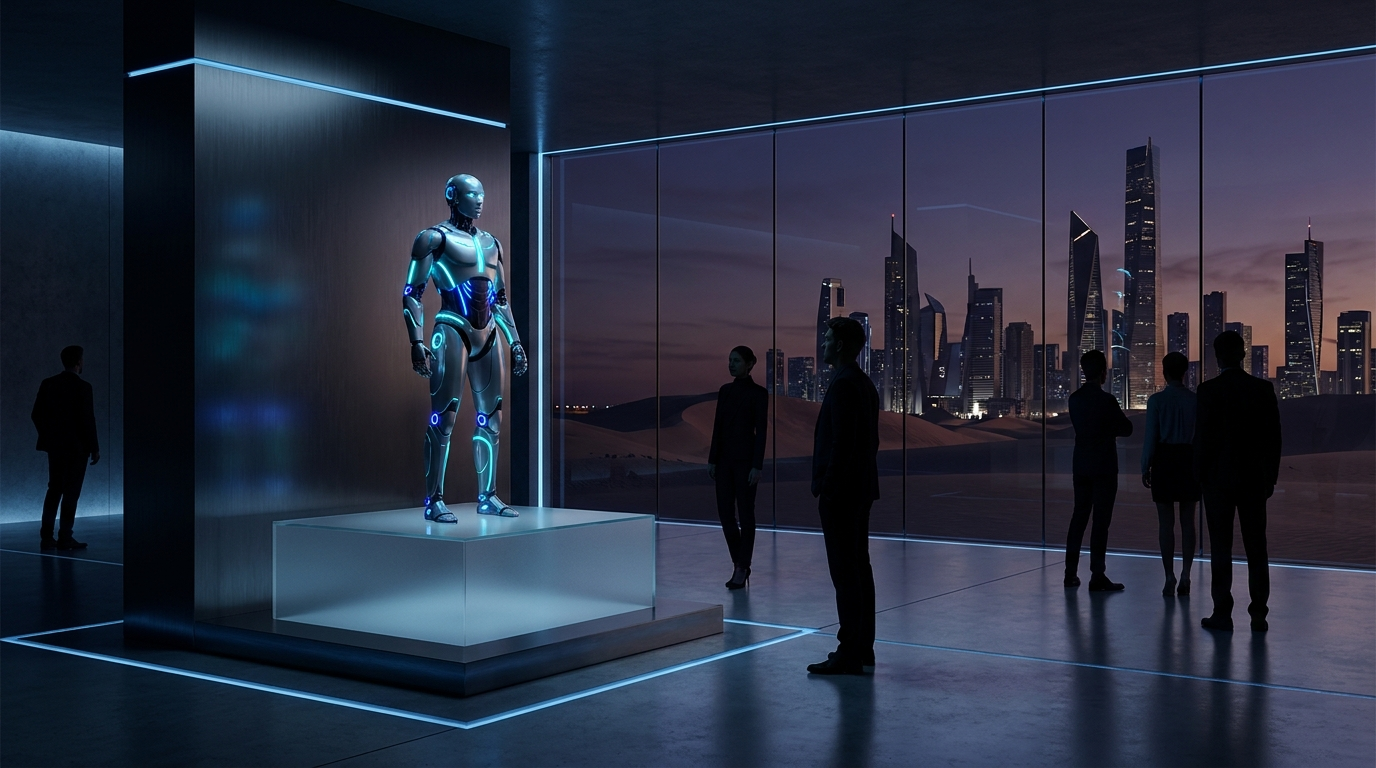
While Qatar and Abu Dhabi are buying stakes abroad, Saudi Arabia is trying to build capacity at home. In November, QSS AI and Robotics, a Saudi firm, opened the "Humanoid Lounge" in Riyadh in partnership with the UK startup Humanoid, describing it as the Middle East's first dedicated humanoid robotics showroom. Visitors can watch live simulations and interact with the HMND-01 Alpha robot, while QSS runs a Riyadh Robotics Factory that will handle production locally under the partnership.

The companies have signed a non-binding memorandum of understanding for a pre-order framework covering up to 10,000 units over five years, a target that depends on demand materializing rather than a confirmed order book. QSS has its own track record to point to: it built Sara, Saudi Arabia's first homegrown humanoid robot unveiled in 2023, along with Mohamad and Saud, robots designed to converse in Arabic and other languages and deployed at events including LEAP and the AI for Good Global Summit.

QSS chief executive Elie Metri frames the effort around workforce transformation rather than replacement, arguing that "the real question is not what robots will replace, it is what they will allow people to become." The pitch fits neatly into Vision 2030's push toward automation and diversification away from oil revenue. Whether a 10,000-unit pipeline converts into confirmed contracts the way Agility's warehouse deployments already have is the test that will determine if Riyadh's homegrown approach can compete with companies that are years ahead on deployed hardware.

07

The Cautionary Tale Sitting Next Door

Saudi Arabia's industrial robotics ambitions are not limited to QSS. In February 2024, Alat, the $100 billion electronics manufacturing arm of the Public Investment Fund chaired by Crown Prince Mohammed bin Salman, signed a strategic partnership with SoftBank to build industrial robots inside the kingdom. That deal was meant to anchor Saudi Arabia as a manufacturing hub for the hardware side of physical AI, not just a buyer of finished robots.

The rollout has not gone smoothly. On April 8, Alat removed CEO Amit Midha, a former Dell executive who had led the company for three years, and abandoned its parallel plan to invest in domestic semiconductor manufacturing, reassigning and in some cases laying off the chip team. Dr. Muhammad Nasser Aldawood, PIF's head of industrials and mining, took over as acting CEO, with resources redirected toward data center development instead. Alat has said its robotics, air conditioning and surveillance equipment manufacturing deals "remain firmly in place," though the company has not published an updated timeline for the SoftBank robotics venture since the leadership change.

The episode is a useful check on the more polished narratives coming out of the Gulf's robotics push. State-linked industrial ventures can move fast on announcements and slower on delivery, and the same PIF ecosystem funding QSS's Riyadh showroom is also absorbing a public setback in a related manufacturing bet just a few months earlier.

08

Why Wall Street Can't Agree on the Size of This Market

Ask two banks how big the humanoid robot market will become and the answers barely resemble each other. Goldman Sachs, in a widely cited 2024 report, put the total addressable market at $38 billion by 2035, a sixfold increase from its own earlier $6 billion estimate, driven by manufacturing costs falling roughly 40% faster than analysts had expected. Morgan Stanley, publishing about a year later, framed the opportunity on a completely different scale: $5 trillion by 2050, including supply chains, maintenance and support, with more than 1 billion humanoid units in use worldwide.

The two forecasts are not really contradictory once the time horizons are separated. Goldman is describing an emerging industrial tool over the next decade. Morgan Stanley is describing a mature technology diffused through households and factories over the next quarter century, projecting 930 million units in industrial and commercial use against roughly 80 million in homes by 2050, concentrated heavily in China and the United States.

What both banks agree on is the shape of the curve, not the number. Costs are expected to keep falling, adoption is expected to stay slow through the early 2030s and accelerate later, and the gap between the two estimates says more about how immature the forecasting base still is than about which bank is right. For Gulf funds writing checks now, that uncertainty is itself part of the case for entering early rather than waiting for consensus.

It is worth remembering that Goldman revised its own number sixfold in a single update once real manufacturing data came in. A market this young rewards investors who accept that today's estimate is a placeholder, not a forecast to be relied on for portfolio math a decade out.

Projected Humanoid Robots in Use by 2050

Source: Morgan Stanley Research

09

The Warehouse Math Behind the Hype

Strip away the trillion-dollar headlines and the near-term case for humanoid robots is a fairly ordinary labor economics story. The United States alone has more than one million unfilled warehouse and logistics positions, according to figures Agility Robotics cites in explaining its own customer demand. Robots priced like industrial equipment, leased rather than purchased, are being pitched as a way to fill that gap in the current generation of deployments.

The cost curve is what makes the pitch increasingly credible. Morgan Stanley estimates a humanoid unit cost roughly $200,000 in 2024 in high-income markets, a price expected to fall to around $150,000 by 2028 and toward $50,000 by 2050, with even lower prices projected in lower-income countries as manufacturing scales. That trajectory mirrors the cost curves industrial robotics, and earlier solar panels, followed once production volumes crossed a threshold.

For the Gulf, where labor markets already lean heavily on expatriate workers in logistics and construction, falling robot costs raise a longer-term question that none of the current deals answer directly. QSS frames its Riyadh push around what workers "become" rather than what they lose, but a price curve heading toward $50,000 a unit by mid-century will eventually test that framing against the sheer economics of automation in a region that imports most of its labor force.

None of the deals covered here disclose a specific timeline for that domestic labor question, and none of the executives quoted address it directly. That gap in the public record is itself worth flagging, since a region planning to deploy thousands of robots under Vision 2030 will eventually need an answer more concrete than a slogan about what workers become.

Projected Humanoid Robot Unit Price (High-Income Markets)

Source: Morgan Stanley Research

10

Two Tracks, One Bet on Physical AI

Two Tracks, One Bet on Physical AI

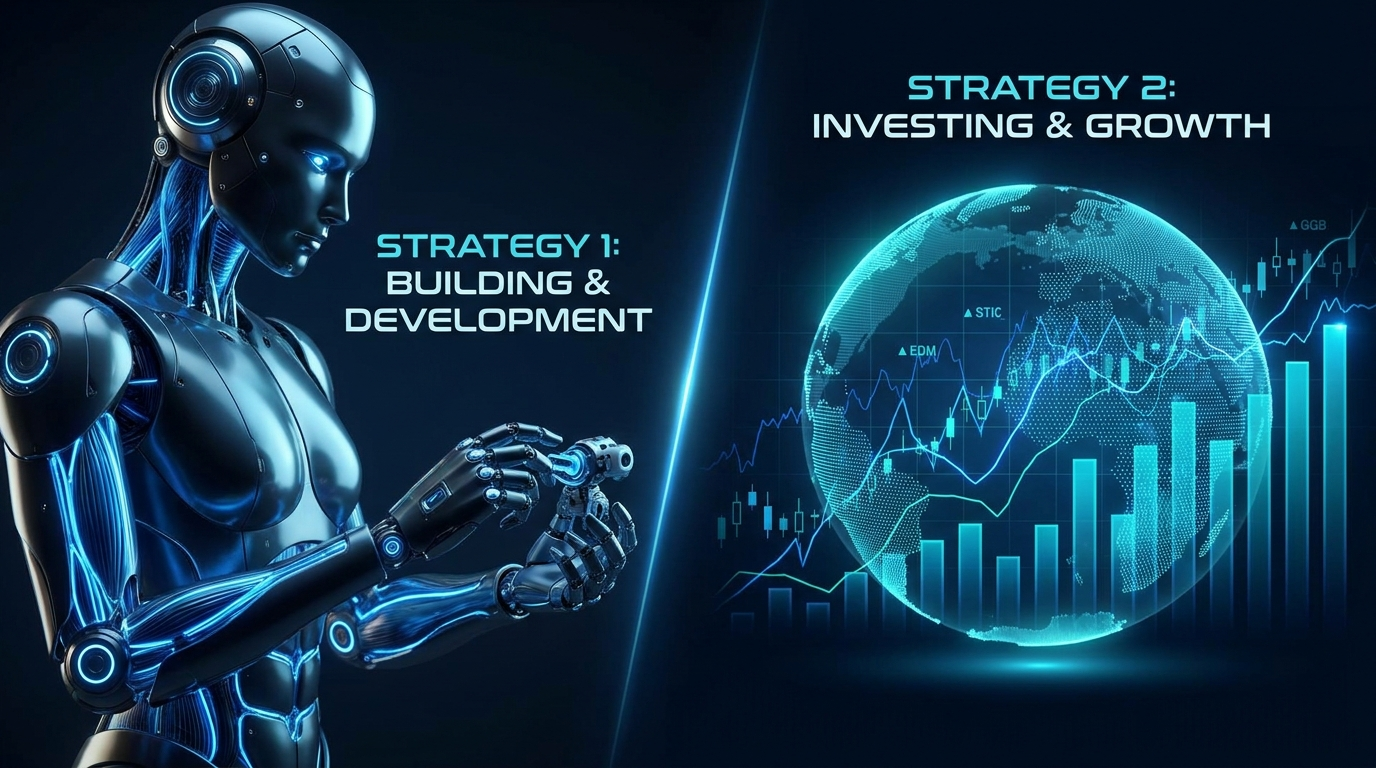
Put the last six months together and Gulf capital is running two distinct strategies toward the same technology at once. Qatar and Abu Dhabi are buying minority stakes in the companies most likely to win, betting that Apptronik, Figure, Neura or a handful of peers will end up owning the standard the way Nvidia ended up owning AI chips. Saudi Arabia, through both QSS's private partnership and Alat's state-backed manufacturing venture, is trying to build the hardware and supply chain domestically, betting that owning production capacity matters as much as owning equity.

Neither approach has been tested by a full market cycle. The investment track looks lower risk on paper, since QIA's stake in Apptronik moves with a company that already has Mercedes-Benz as a paying customer. The manufacturing track carries the execution risk Alat's leadership shake-up just demonstrated, though QSS's 10,000-unit framework has not faced that kind of setback yet.

What connects both tracks is a shared judgment that humanoid robots have crossed from research demo to investable asset in the space of about a year, and that whoever sits out this round of financing will be paying a much higher price for the same access once Agility's Nasdaq debut proves out the model for the rest of the sector.

// Want to apply this?

Let's discuss how this applies to your business.

A senior engineer reviews every inquiry and responds within one business day.

Start a Conversation