GCC Governments Embrace Arabic-First AI Assistants for Citizen Services
Arabic Language AI8 min readJuly 1, 2026

GCC Governments Embrace Arabic-First AI Assistants for Citizen Services

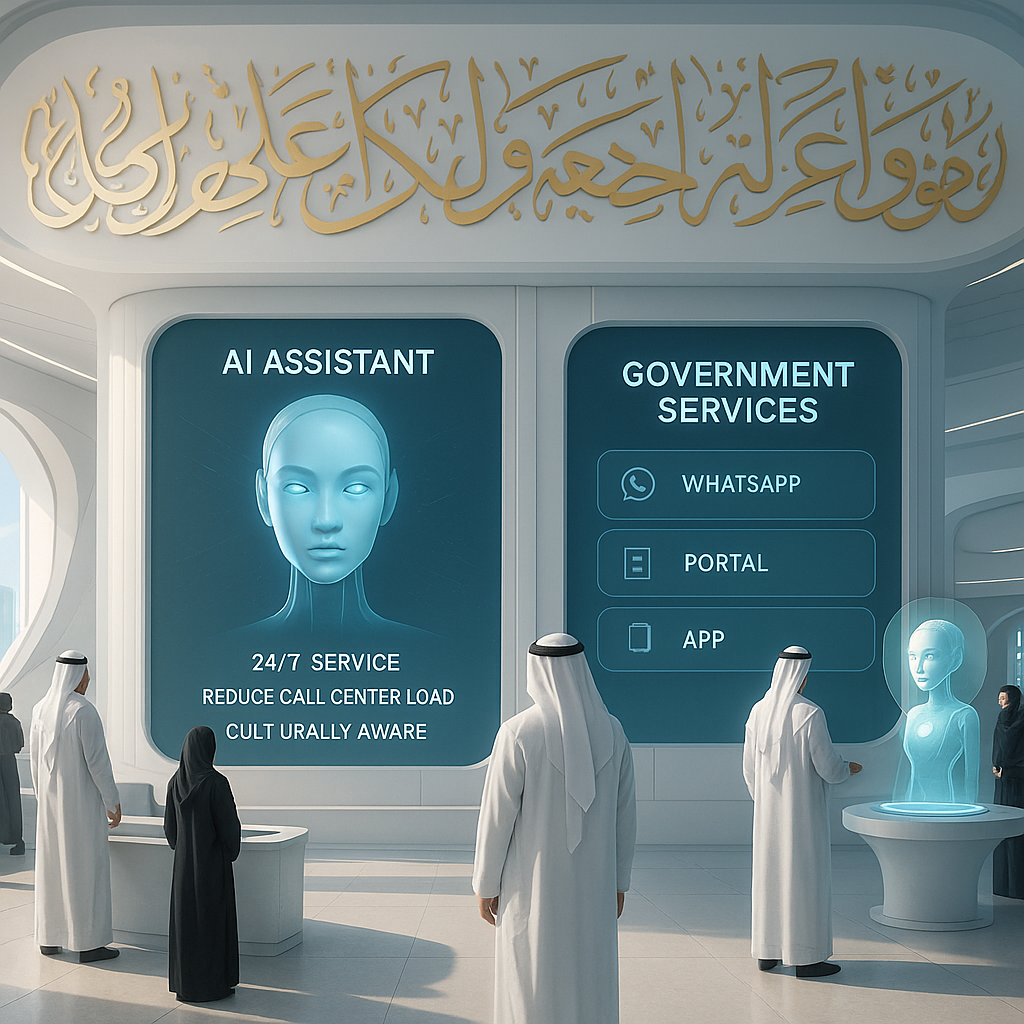
Saudi Arabia, the UAE, and other GCC countries are leading the charge in deploying Arabic-first AI assistants to enhance citizen services. These cutting-edge solutions utilize the latest Arabic large language models to offer 24/7 service, reduce call center loads, and deliver culturally aware experiences aligned with national AI and digital strategies. Key initiatives include integration into government portals, WhatsApp, and mobile apps, supported by strong policy drives like Saudi Vision 2030 and UAE Digital Government strategies.

01

The Rise of Arabic-Focused Large Language Models

In recent years, the GCC region has seen significant developments in the field of AI, particularly with Arabic-focused Large Language Models (LLMs). These models, funded by regional players such as Saudi Arabia and UAE-backed AI labs, offer enhanced capabilities for understanding Arabic language and dialects, surpassing the efficacy of generic global models. This advancement is pivotal in tailoring digital services to cater to local linguistic nuances, thereby facilitating better governmental communication and service delivery to citizens.


02

Deployment Across Government Platforms

Governments in the GCC are deploying AI assistants across various platforms including government portals, WhatsApp channels, and mobile applications. These assistants handle common queries such as fees, visas, licensing, fines, and social services in both Arabic and English. The ability of these AI tools to function bilingually ensures that a larger segment of the population can access information swiftly and efficiently, thus improving public satisfaction and engagement.

03

Strategic Alignment with National AI and Digital Government Plans

The adoption of Arabic-first AI assistants is strongly backed by national strategies such as Saudi Vision 2030 and the UAE's Digital Government strategy. These initiatives emphasize AI-driven citizen engagement and service automation, aiming to position their countries at the forefront of global digital innovation. By doing so, they not only enhance citizen satisfaction but also strengthen their economies by fostering technological advancements and efficiencies.

04

Technical and Compliance Hurdles

While the move towards Arabic-first AI is promising, it is not without challenges. Technical and compliance-related issues such as data residency, security, and responsible AI usage create demands for sovereign or regionally hosted AI solutions. Governments and enterprises need to ensure that AI deployments meet both local regulations and ethical standards, which often necessitate collaborations with local tech firms and startups.

05

Opportunities for Local Startups and Integrators

The rise of Arabic-first AI solutions presents a significant opportunity for local startups and system integrators. These entities are well-placed to develop, fine-tune, and maintain AI assistants that are tightly integrated with existing government infrastructures. Additionally, there is potential to extend these innovations to other sectors such as banking, telecommunications, and large enterprises, enabling the broader GCC economy to benefit from digital transformation.

// Want to apply this?

Let's discuss how this applies to your business.

A senior engineer reviews every inquiry and responds within one business day.

Start a Conversation