Arabic-First AI Copilots Revolutionizing GCC Government Services
Arabic Language AI8 min readJuly 2, 2026

Arabic-First AI Copilots Revolutionizing GCC Government Services

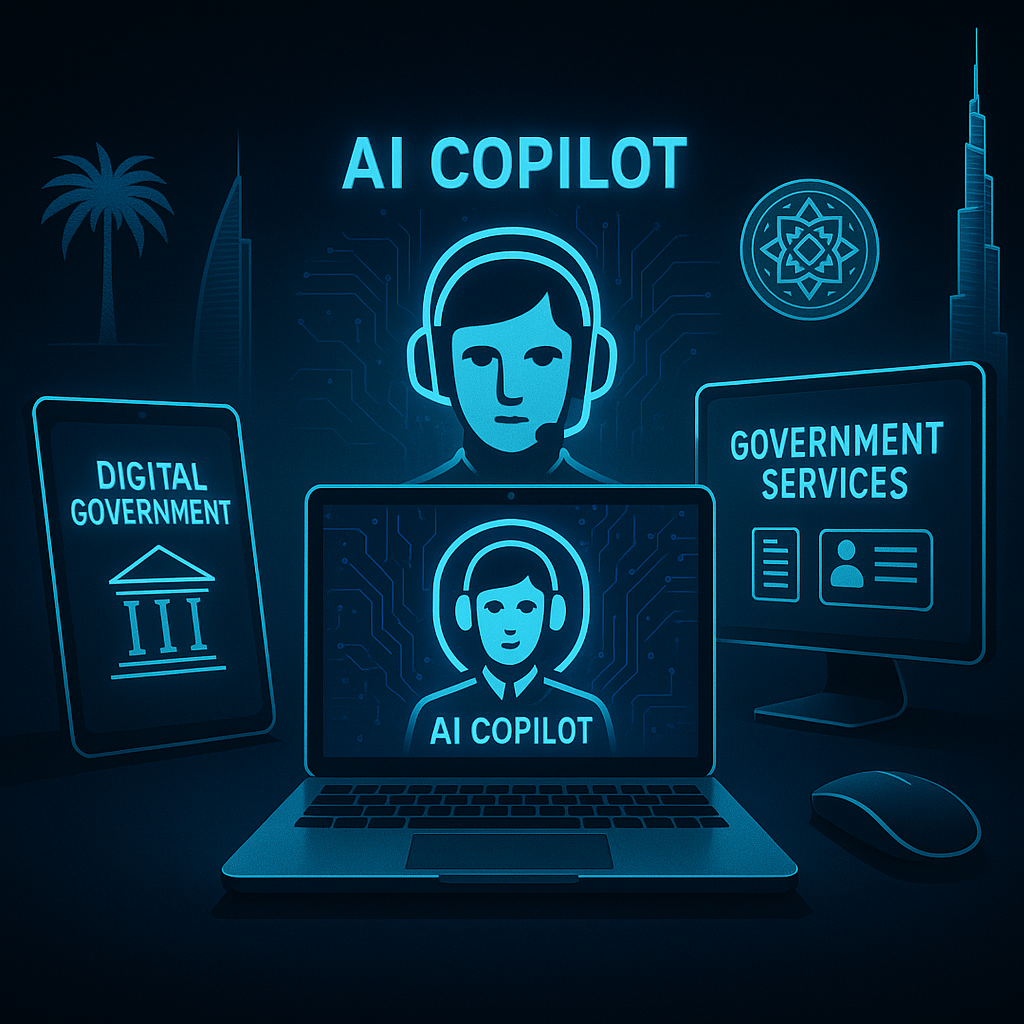
GCC states are pioneering the use of Arabic-first AI copilots to enhance government services. By 2025-2026, as Arabic AI models and infrastructure mature, these intelligent assistants will transform citizen engagement, reduce costs, and improve service delivery. Key players, such as Saudi Arabia and the UAE, are leading ambitious initiatives in digital government, paving the way for a new era of efficient public sector services.

01

The Tipping Point: 2025-2026

The years 2025 and 2026 are expected to be a tipping point for the deployment of Arabic-first AI copilots in public services across the GCC. This is due to the maturation of Arabic Large Language Models (LLMs), advances in local data centers, and the implementation of national AI regulations. These factors collectively enable the production-grade use of AI copilots for government services, promising to significantly improve efficiency and citizen engagement.


02

Key GCC Initiatives

Saudi Arabia and the UAE are at the forefront of bringing AI copilots to government services. Saudi Arabia's accelerated digital government programs and the UAE's AI-first service channels demonstrate their commitment to leveraging AI to improve public services. These nations are piloting AI in various sectors, such as municipalities, health, and justice, aiming to streamline operations and enhance service accessibility.

03

Opportunities for Business and Innovation

For startups and system integrators in the GCC, the rise of AI copilots presents significant business opportunities. Building specialized Arabic AI copilots for licensing, courts, taxation, customs, and smart city services can open new markets. The localization of AI solutions to meet specific regional regulatory and cultural needs will be a critical success factor.

04

Technical Requirements for Arabic AI Copilots

Developing effective Arabic AI copilots requires addressing several technical challenges. This includes the need for dialect-aware NLP capabilities, secure integration with existing government backends, and adherence to local identity verification systems like Nafath and UAE Pass. Furthermore, robust audit logging mechanisms must be established to ensure compliance and security.

05

Risk and Compliance Considerations

Implementing AI copilots in government services comes with various risk and compliance challenges. These include ensuring data residency and alignment with both local regulations and Sharia-compliant workflows. Moreover, addressing bias in Arabic AI models and ensuring accessibility for users with low digital literacy is paramount to achieving inclusive public services.

06

Future Outlook for AI in GCC Government

As GCC countries continue to embrace AI technologies, the role of Arabic-first AI copilots is set to grow exponentially. These systems will play a crucial role in crafting a more efficient, responsive, and citizen-centric government. By strategically investing in AI infrastructure and ensuring robust regulatory frameworks, the GCC can set new standards in public sector innovation and service delivery.

// Want to apply this?

Let's discuss how this applies to your business.

A senior engineer reviews every inquiry and responds within one business day.

Start a Conversation