
The Web Learns to Charge: AI Browsers and the Gulf's Move
AI & Digital Economy7 min readJuly 8, 2026

The Web Learns to Charge: AI Browsers and the Gulf's Move

Cloudflare's July 1 policy, agentic browsers, and AI checkout are rewiring the web's economics. Here is what the shift means for the Gulf's digital economy.

01

The Web Enters Its Accounting Era

For three decades, the web's economics rested on a simple implicit bargain: search engines opened your content to visitors, and you earned from ads and traffic in exchange for letting them crawl it. In the summer of 2026, that bargain began to unravel. On July 1, Cloudflare, through whose network a large share of internet traffic passes, announced a new policy that by default blocks 'mixed-use' AI crawlers from pages carrying ads, effective September 15, and expands its 'pay per crawl' marketplace into 'pay per use.'

The stated reason is blunt. CEO Matthew Prince said the majority of internet traffic is now non-human, and that everyone must go further to build a sustainable ecosystem. The numbers back him: more than 50 percent of AI crawler traffic is just re-fetching pages that have not changed, and bots recently overtook humans as the majority of internet traffic. When AI crawls your content thousands of times without sending you a single visitor, the old bargain collapses.

This shift is not a technical footnote for publishers alone. It is a repricing of an entire layer of the digital economy: who owns content, who pays to access it, and how a user reaches information at all. In this analysis I will trace three simultaneous waves reshaping the web, and close with what they mean specifically for any company or store operating in the Gulf.

02

Cloudflare's Bet: No Crawl Without Compensation

Cloudflare's Bet: No Crawl Without Compensation

The core of Cloudflare's policy is that it flips the default. Instead of content being open to crawling unless the owner blocks it, blocking becomes the baseline for new customers, new sites, and free-tier customers on ad-bearing pages. A publisher who wants to allow an AI crawler does so on their terms, and can charge for it through a 'pay per crawl' mechanism built on an HTTP payment code.

The newer development matters more than the blocking itself. Cloudflare is expanding from 'pay per crawl' to 'pay per use,' so a publisher earns when their content generates actual value, not merely when it is read. The first two partners in this model are Ceramic.ai and You.com, with publishers paid when their content appears in search results or when an engine accesses premium content. That turns the relationship from free crawling into a market with pricing.

What makes this move enforceable is that Cloudflare sits in a rare structural position: a large share of the world's sites pass through its network, so it can impose the rule at scale in one stroke. When a player of that size moves, what was an individual choice for each publisher becomes an industry standard that AI labs find hard to ignore.

03

Why the Old Deal Broke: The Crawl-to-Referral Gap

To understand why publishers moved, look at the imbalance in the relationship. Cloudflare says more than 50 percent of AI crawler traffic is re-fetching pages that have not changed, consuming server resources with no new value. At the same time, bots have overtaken humans as the majority of internet traffic. The result is that a publisher pays rising infrastructure costs for automated visitors who neither buy nor view an ad.

The deeper problem is in the search model itself. When an AI engine answers a user's question directly from a publisher's content, the reason to click the link disappears. The visitor gets the answer, and the publisher loses the visit that funded their work. Cloudflare also points to a gap in access between companies, noting that an engine like Google has roughly twice the information access of others, deepening publishers' worry about the balance of power.

This imbalance is what explains the shift from 'open everything' to 'account for everything.' The message to publishers and companies is clear: content that used to be given away for traffic is now an asset that must be priced explicitly, because the traffic mechanism that once compensated it no longer works as it did.

AI crawler behavior: the imbalance (%)

Source: Cloudflare

04

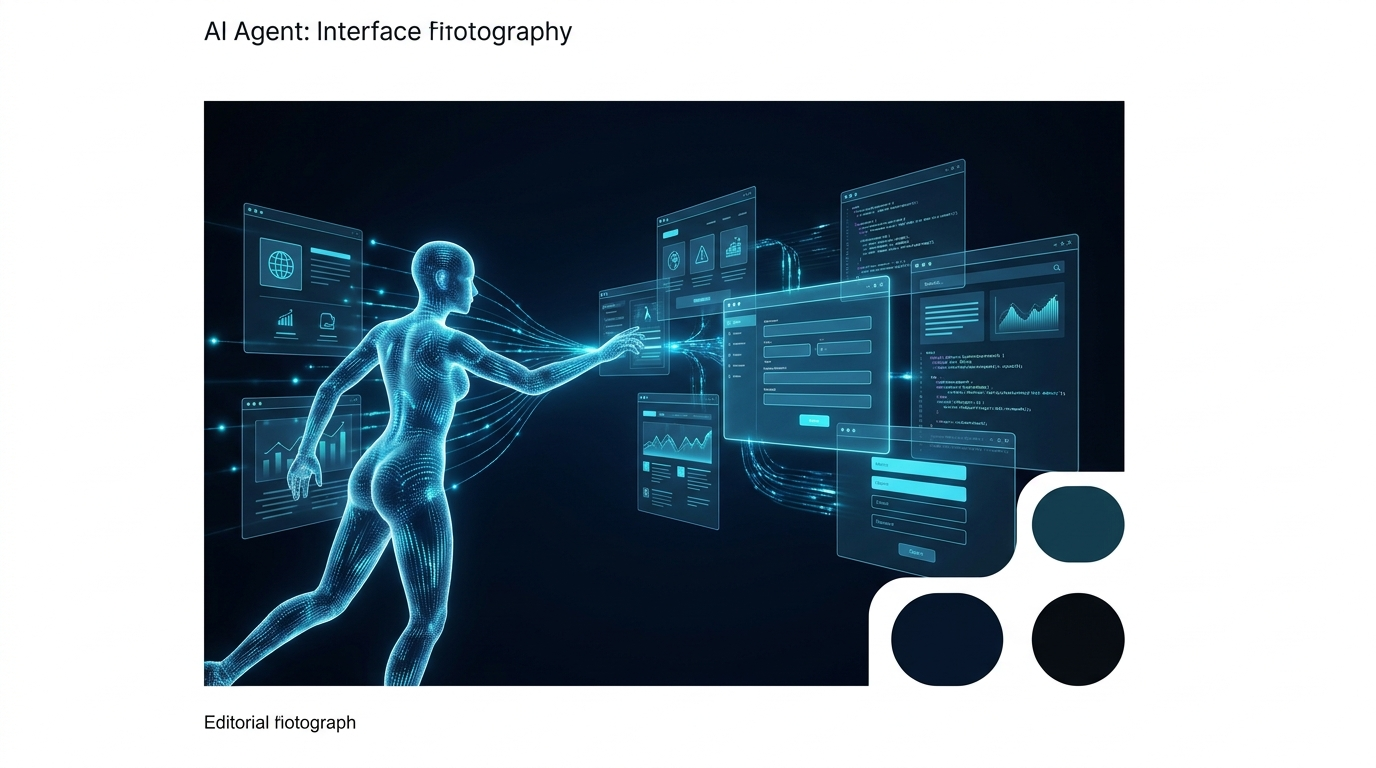
The Second Wave: The Browser Becomes an Agent

The Second Wave: The Browser Becomes an Agent

Alongside the crawling battle, the other side of the equation is changing: how the user browses in the first place. Agentic browsers, which do not just display pages but act on the user's behalf, are moving from experiment into serious competition. Perplexity raised about $200 million for its Comet browser at a valuation near $20 billion, bringing its total funding to roughly $1.72 billion, according to June 2026 reports.

The logic of that investment is that the browser is the 'front door' to the agent economy. When an agent inside the browser reads pages, compares, fills forms, and executes steps on the user's behalf, the relationship between a site and its human visitor changes fundamentally. The site is no longer addressing a human eye that browses, but an automated agent that extracts information and completes a task by the shortest path.

For site and store owners, this redefines what 'good design' means. A site that relies entirely on visual aesthetics and human navigation may become unreadable to an agent looking for structured data, clear prices, and automatable purchase steps. Whoever builds a site today that an agent understands as well as a human does positions themselves better for the coming wave.

05

The Third Wave: Agentic Commerce and In-Chat Checkout

The third wave closes the loop: the agent does not just search and read, it buys. Agentic commerce, where an AI agent completes a purchase on the user's behalf inside the chat or browser interface, has become a real competitive front among the big players. When the point of purchase moves from the store page into the conversation, it changes who owns the customer relationship, who sees their data, and who controls the moment of decision.

This poses an existential question for online stores. If a customer asks their agent to find the best product and buy it directly, then a store whose products do not surface correctly to the agent vanishes from the purchase journey entirely, however beautiful its design. Visibility is no longer just in front of the user, but in front of the agent deciding on their behalf.

From here rises a new concept called 'answer engine optimization,' meaning preparing content and data for AI to understand and cite, not merely to top a list of blue links. A company that realizes early that its new audience includes automated agents, and builds its data and products in a language those agents understand, gains an edge in a market being reshaped right now.

Perplexity funding trajectory (US$ billions, cumulative)

Source: TechTimes

06

What This Means for the Gulf Digital Economy

What This Means for the Gulf Digital Economy

The Gulf is more exposed to this shift than most, because its digital economy is in rapid growth. Estimates suggest Saudi Arabia's e-commerce market alone could reach about $708 billion by 2033, driven by AI, digital payments, and Vision 2030. When that enormous scale is built during a period when the rules of the web itself are changing, building on the old rules becomes a risk.

The opportunity here is twofold. On one hand, Gulf stores and platforms that prepare their content and products for agents and answer engines early will capture new demand ahead of competitors. On the other, Arabic publishers and content producers hold a scarce asset: high-quality Arabic content that AI models need and whose sources are rare. In an economy that pays for content, good Arabic content becomes a priceable asset rather than just a cost.

But the risk is real too. A company that builds a site or app today ignoring these waves may find itself, in two years, outside the purchase journey run by agents and outside the answers engines generate. The practical decision is to design new sites and stores to be agent-readable, and to treat content as an asset that is priced and protected, not a free resource to be consumed.

07

What a Company in the Region Should Do Now

After these three waves, the practical question remains: what should a company or store in the Gulf do today? First, treat your content as an asset, not a giveaway. Review who crawls your site and how, and consider clear access policies, because content that used to be given away for visits is now priceable in a new system.

Second, design for visibility in front of agents, not just humans. Organize your data, products, and prices in a way AI understands, and make purchase steps clear and automatable. The beautiful site an agent cannot read will disappear from a purchase journey controlled by engines and agentic browsers.

Third, invest in high-quality Arabic content as a competitive edge. In a market where AI pays for content and solid Arabic sources are few, producing accurate, structured Arabic content becomes an asset that serves your visibility and may become a revenue source. The opportunity is real, but it rewards those who read the shift early and redesign their digital presence on the web's new rules, not those who cling to rules that are now the past.

// Want to apply this?

Let's discuss how this applies to your business.

A senior engineer reviews every inquiry and responds within one business day.

Start a Conversation